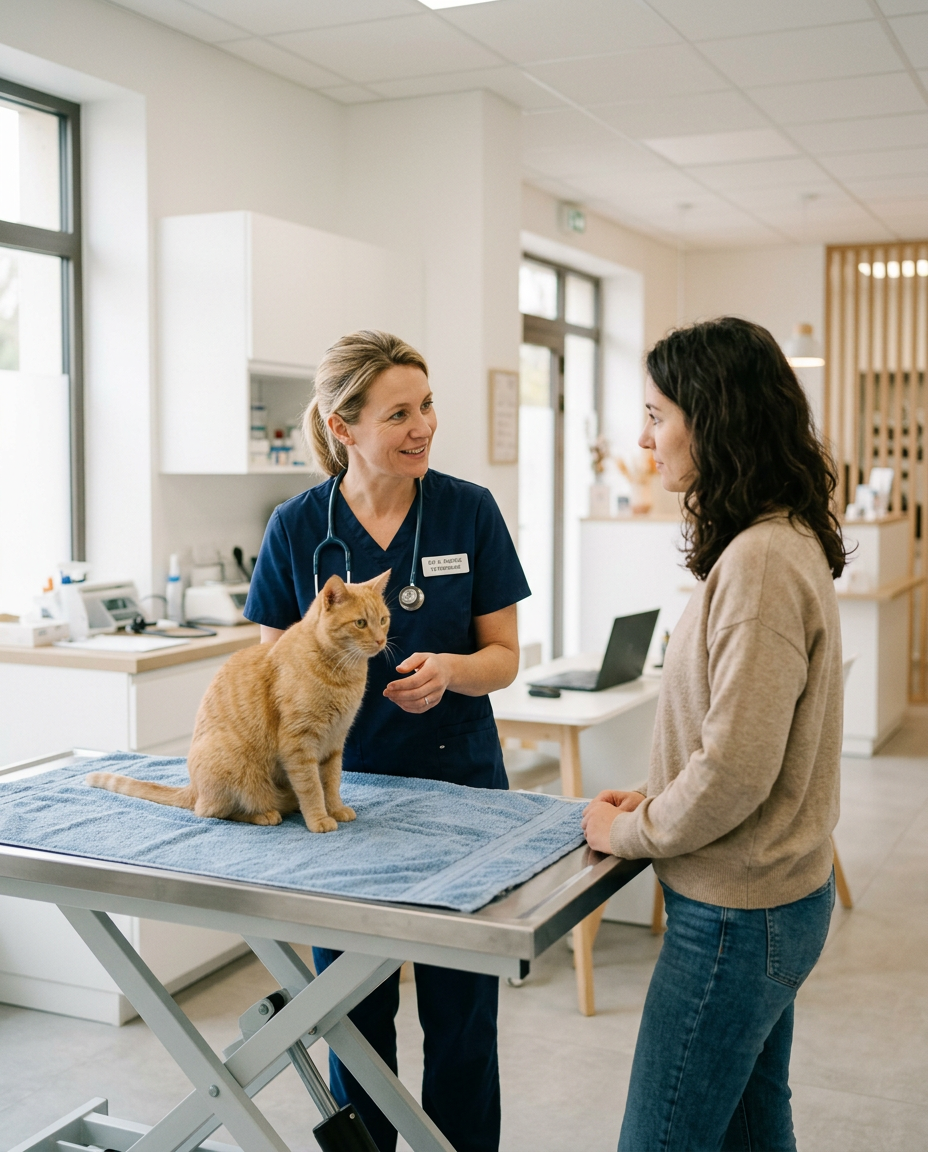
Worrying about your pet is never too much
You keep watching them out of the corner of your eye, you think back to what they ate yesterday, you hesitate to call the vet. This watchfulness is not excessive: it shows how much you care. Here is how to give it a framework, so that it weighs less.

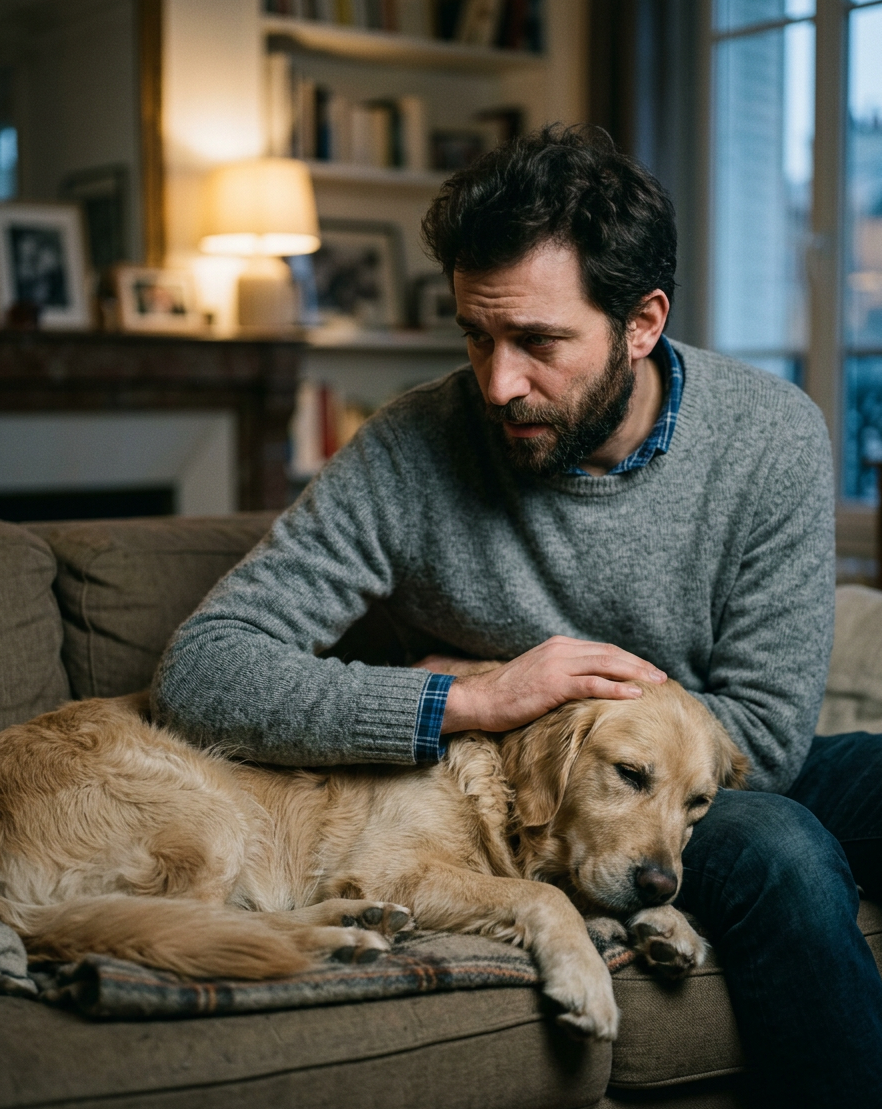
Watching over a pet means carrying a load
No one says it enough: caring for a pet also means thinking for them. It means remembering the date of the last vaccine, what they ate yesterday, how they got up this morning. It means reading their silences and guessing what they cannot tell you. This constant attention is called mental load, and it is very real.
When something changes, it weighs more. A pet calmer than usual, a bowl left half full, a way of lying down that is not theirs: your mind starts to race. Is it passing? Should you be concerned? This watchfulness is not a flaw. It shows that you know them better than anyone, and that is exactly what makes your eye valuable.
A worry is never too much. It is a signal that deserves a clear answer, not empty reassurance.
What really weighs on you: doubt, alone
It is not loving your pet that wears you out. It is being left alone with doubt, with nothing to compare against, with no clear answer at the moment the question arises. At 10 p.m., it is hard to know whether it is time to wait or time to act.
Two things feed this weight. First, memory: you think you remember, then you hesitate between Monday and Thursday, between once and three times. Then, the lack of reference points: without knowing what is usual for your pet, everything can seem abnormal, or on the contrary everything can seem harmless.
The enemy is not your worry, it is the lack of clarity. And that, we can work on. Not to stop caring about them, but so that this worry becomes lighter, because it rests on something concrete rather than on impressions.
Observing and noting: turning doubt into facts
A vague doubt becomes easier to carry once it takes the shape of facts. No need for a complicated logbook: a few lines are enough.
- What you see, in your own words. “They haven't touched their bowl since last night” is worth more than “they're not eating well”.
- Since when and how many times, even roughly.
- What is usual for them: their routines, their appetite, their energy.
- What has changed around them: food, a move, an absence, a visitor.
Note what you observed, not what you think it means. You do not have to interpret: that is your vet's job. But by writing things down, you keep a trace your memory would not have kept, and you stop carrying everything in your head. A small gesture, repeated, that lightens the load.
A history that goes with you
Over the weeks, your notes form a history: an overview of your pet's health. It lets you spot a gradual change, compare with last month, and answer the question your vet asks most often: “Since when?”
This history also helps when your pet changes hands. If they are looked after by a relative, a pet sitter or a boarding facility, or if you see an on-call vet you do not know, the information does not disappear with you. It follows the animal, not the person caring for them. That is continuity of care.
That is the idea behind Charly's journal: a place where your observations are gathered, easy to find, and shared by link whenever you wish. Charly does not replace the vet: it makes each visit more useful, and your evenings of hesitation a little calmer.
Knowing when to call, part of peace of mind
Giving yourself reference points also means knowing in advance how you will react. Some signs call for not waiting: a pet that is very listless, has trouble breathing, or whose condition seems to be getting worse hour by hour. In those cases, call your vet or the on-call service without delay.
For everything else, if doubt remains, call as well. A call is never out of place. Describing what you have noted is enough: the assessment is up to the veterinary team, and your notes make the exchange faster and more precise.
You can also ask your vet, at your next appointment, which signs to watch for in your pet in particular. Noting their answer gives you a personal reference point that you will find again when evening comes.
You do not have to choose alone between “too much” and “not enough”. You have to observe, note and describe. The rest is done together, with your vet.
This article offers guidance on observing and describing. It does not replace your veterinarian's advice. If in doubt, contact your clinic.