Going on holiday: what your pet sitter needs to know about your pet
The bags are almost packed, but one thought keeps coming back: will your pet sitter know everything they need to? You know your pet's habits by heart, without ever having written them down. Putting them on paper before you leave eases your departure, and your pet's stay.


Why write everything down before you leave
You've known them forever: the time they ask for dinner, the way they curl up to sleep, the noise that worries them. To you, all of this goes without saying. To someone meeting your pet for the first time, nothing is obvious.
That's where the worry before a trip comes from. Not from a lack of trust in your pet sitter, but because so much information lives only in your head. That worry is normal: it shows how much you care.
Writing it down before you go is a way of handing over the baton. Your pet sitter doesn't have to guess, your pet finds their bearings, and you can relax a little more. It also saves the evening messages asking “what time does he eat again?”.
You don't need a perfect document. A clear page, written a few days before you leave, is worth more than an ideal list scribbled in the last-minute rush.
Your pet's day, step by step
Start with what shapes their days. The more precise you are, the more useful it is:
- Meals. What, when, where, in which bowl, what they like or don't like. If their food changed recently, mention it.
- Walks and outings. Times, length, usual routes, behaviour at the door or on the lead.
- Rest. Where they sleep, what reassures them, what they avoid.
- Little quirks. A favourite toy, an evening ritual, a fear (thunder, the vacuum cleaner, visitors).
- House rules. What is allowed, what isn't, which doors stay closed.
These habits are also a point of comparison. A pet sitter who knows that your cat always comes to find you in the morning will notice sooner a day when they stay in their corner. You don't expect them to interpret: only to notice what is out of the ordinary.
What is useful to watch for
Your pet sitter isn't there to treat or to interpret: they are there to watch over your pet and keep you informed. Tell them what matters for your pet:
- what is normal for them: appetite, water intake, energy, stools, the way they move;
- what has worried you recently, and what your vet asked you to keep an eye on;
- what to note if something changes: since when, how often, in what circumstances.
If your pet follows an instruction or a treatment from your vet, leave the details exactly as your vet gave them (prescription, health record, message) rather than summarising them from memory.
Also say when you want to be told: a meal left untouched, an odd day, a detail that seems unusual to you. This gives your pet sitter permission to write to you without fearing they are disturbing you. And for anything that seriously worries them, it is better not to wait before calling the vet.
Contact details to leave in plain sight
When an urgent question comes up, nobody wants to hunt for a phone number. Gather them on one page, visible and easy to find:
- Your contact details, and those of a trusted person who can be reached if you don't answer (time difference, no signal, travelling).
- Your usual vet, with their address and opening hours.
- The nearest out-of-hours vet service to where your pet is staying, if it is different.
- Useful documents: health record, microchip number, insurance, current prescription.
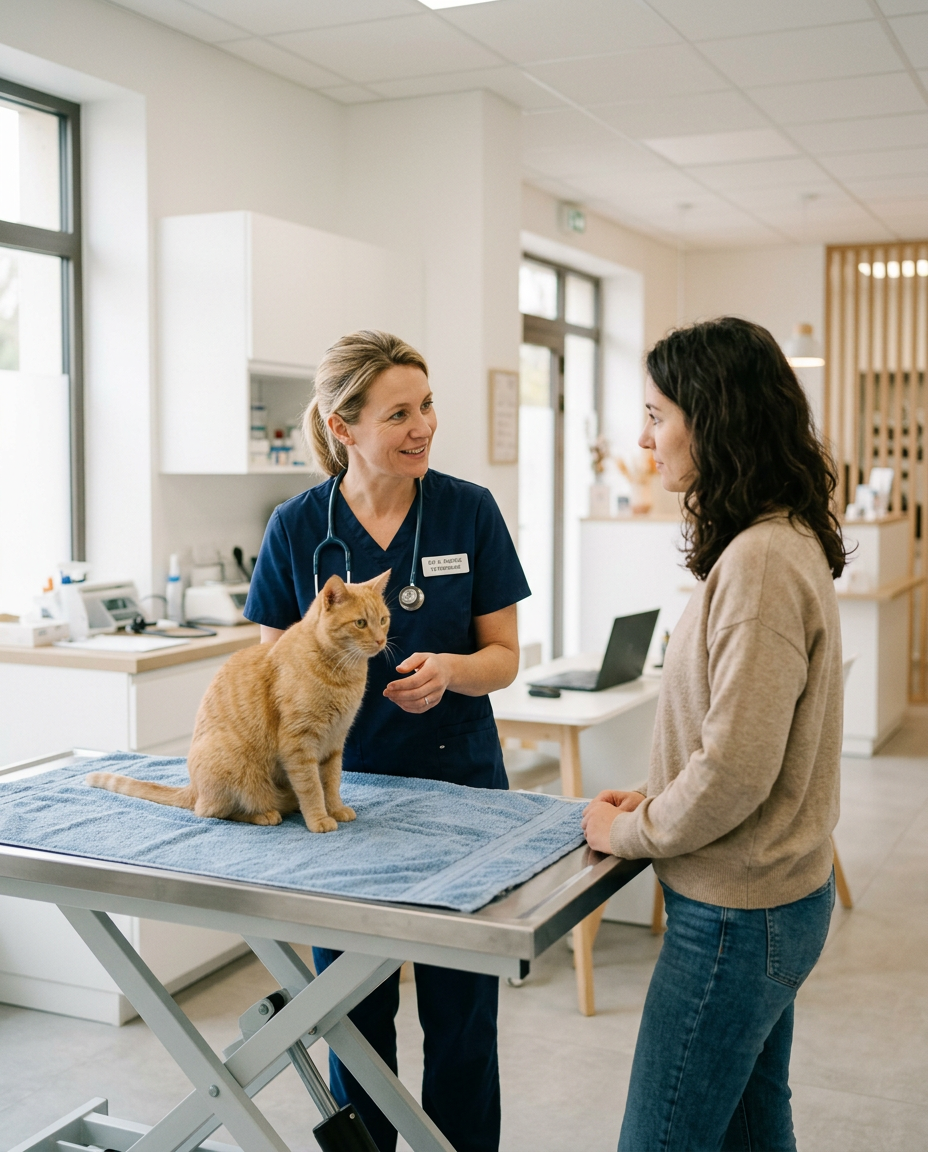
Also let your vet know that someone else will be looking after your pet, and give them the person's name. If the need arises, the team will know who they are speaking to. If your pet is staying at a boarding facility, ask them to record the same information.
Meeting before you leave
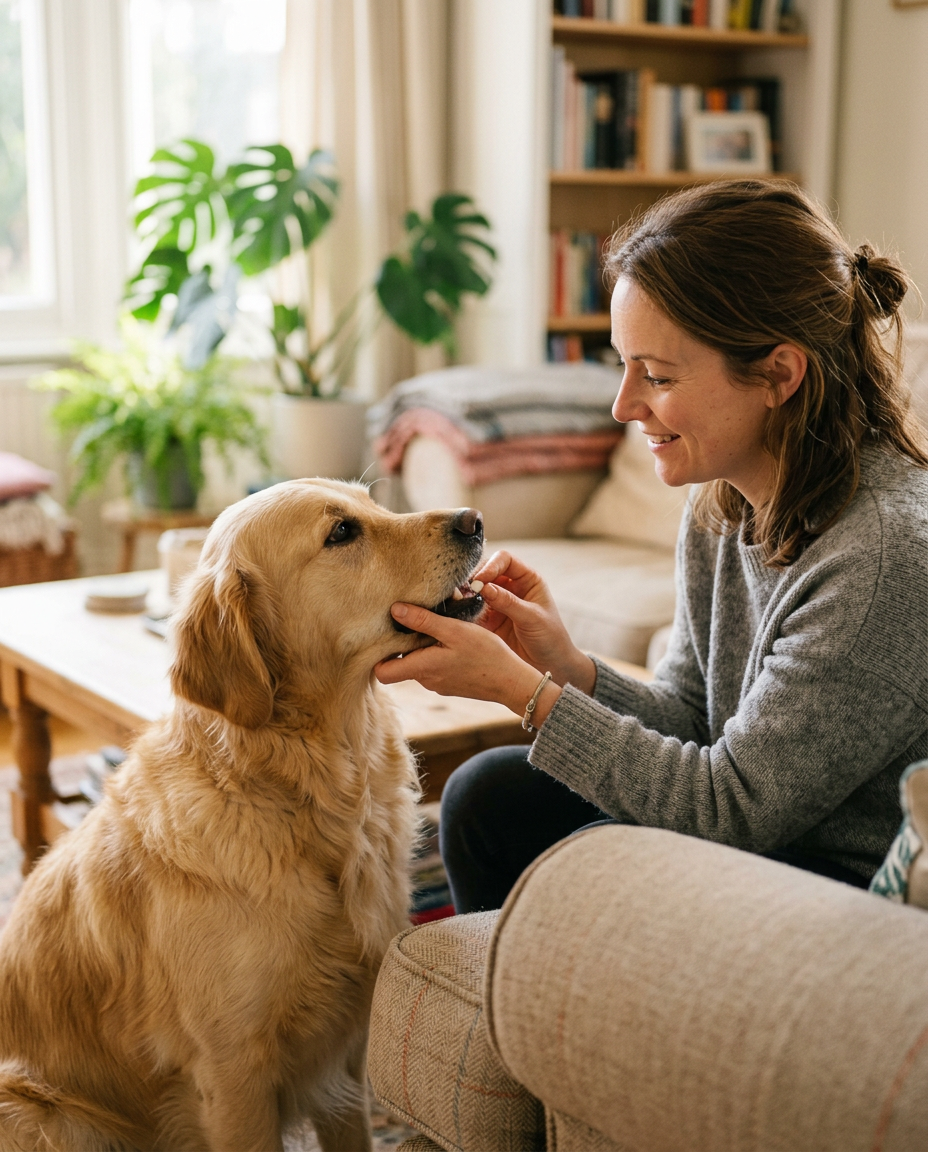
If you can, have your pet sitter come over at least once before you leave. Introduce them to your pet, show them the house, the bowl, the place where your pet sleeps. Watch how they get to know each other: an animal that sniffs, hesitates and then comes closer already tells you a lot about how to go about the first few days.
Take the opportunity to go through your page together: read it again, let them ask questions. It's often at this point that you realise you forgot a habit or a detail that seemed obvious.
Before leaving, agree on how you will get news: a message a day, a photo, a call if needed. The aim isn't to check up on your pet sitter, but to stay connected to your pet. A little regularity helps you truly enjoy your holiday.
Information that follows your pet
A sheet left on the fridge is a good start. But it stays at home, it goes out of date, and it doesn't follow your pet if they change place. Health information belongs to the animal, not to a house or to one person: it should follow them everywhere.
With Charly, your pet's journal gathers their observations and history in one place. You can share it through a link with your pet sitter, or with your vet: everyone reads the same information you do. If a question comes up while you are away, the context is already there, with no need to reach someone on the other side of the world to find a detail.
You go away, but the information stays with your pet. That is what continuity of care means.
This article offers guidance on observing and describing. It does not replace your veterinarian's advice. If in doubt, contact your clinic.